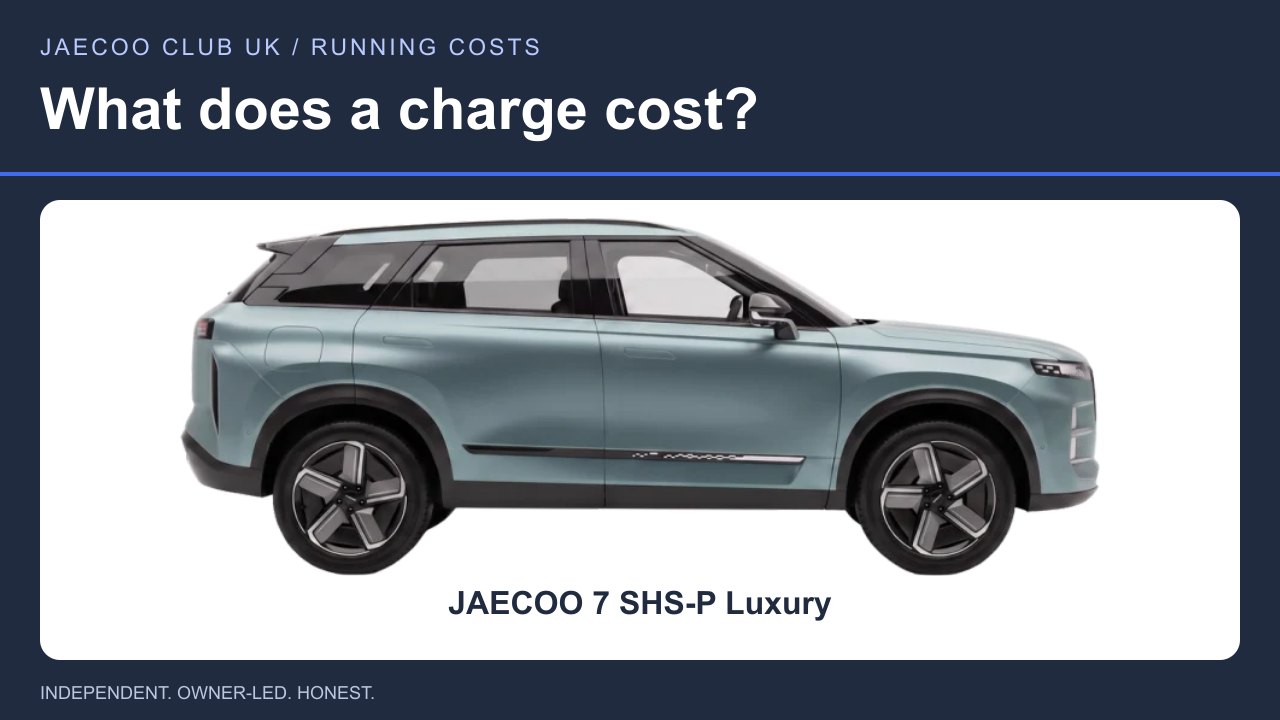
JAECOO 7 SHS-P Luxury
A large plug-in MPG number can look like the answer to everything. It leaves out one rather important ingredient: the electricity. Here is how to read the figures without confusing a brochure, a dashboard and a fuel receipt.
Which J7 are we talking about?
| Version | How it uses energy | Useful measure |
|---|---|---|
| Petrol | Petrol engine; check whether the car is front- or all-wheel drive. | Measured UK MPG on comparable journeys. |
| SHS-H | Hybrid without external charging. | Measured UK MPG, with route and conditions. |
| SHS-P | Plug-in hybrid: petrol and externally supplied electricity. | Petrol and electricity cost per mile, plus measured electric range. |
The J7 model hub explains the UK versions. An SHS-P test result does not establish SHS-H economy, even though both use the SHS name.
What independent tests actually found
| Source and car | Reported observation | What limits the comparison |
|---|---|---|
| Auto Express — petrol J7 | Its review reports about 44 mpg on a gentle 50 mph motorway run, falling to the mid-to-high 30s at higher motorway speeds. | Different routes, speeds and drivetrain specifications can change the result. |
| Top Gear — J7 SHS plug-in | The final six-month report describes often exceeding 50 mpg despite infrequent charging, and achieving the claimed 56 electric miles with gentle driving. | One test car and an editorial account; not a controlled UK owner sample. |
| SHS-H | We have not established a comparable, independently measured result for this guide. | A published official figure should not be relabelled real-world data. |
These observations are useful reference points, not promises. We do not combine them into an average because the measurement methods and use patterns differ.
What does “up to 56 electric miles” mean?
JAECOO UK advertises the SHS-P with an 18.3 kWh battery and up to 56 miles of WLTP electric range. WLTP is a standardised comparison test. Weather, speed, heating or cooling, terrain, loading and battery condition all affect a particular journey.
A predicted range on the screen is an estimate, not a measurement of how far you have travelled. Record actual distance from a known starting charge and note any petrol-engine running. If the engine contributes, describe the result as a mixed-energy journey rather than a pure EV range test.
Why plug-in MPG can mislead
MPG counts petrol. It does not tell you how much electricity you bought to achieve those miles. Someone who charges nightly and mostly travels locally can show a very different petrol figure from someone doing long motorway runs with infrequent charging.
For an illustrative calculation—not a J7 test—suppose 200 miles use 10 litres at £1.45 and 30 kWh at 25p. Petrol costs £14.50 and charging £7.50: £22 total, or 11p per mile before other ownership costs. Petrol-only MPG is about 90.9, but calling that journey nearly free would miss the charging bill.
The calculator below includes both energy sources. Compare identical measurement windows and similar battery charge at their start and finish. Otherwise a battery filled before the window can make the period look artificially cheap.
Measure your own result properly
Choose a normal week or longer and note the dates, model, powertrain, mileage and starting battery percentage. Keep petrol receipts and charging-session records. Record the end mileage and battery percentage, plus the mix of local roads and motorway driving.
For petrol use, repeated full-to-full measurements are generally more useful than treating one dashboard display as a precise quantity of fuel burned. For electricity, use energy supplied at the charger where possible, including charging losses. Record the tariff and any session fees; do not assume every public charger costs the same.
If you only have the dashboard average, say so. A less precise result with an honest label is still more helpful than a very precise-looking number with no method. Our reporting form gives you a structure without claiming your submission is independently verified.
Charging habit matters more than chasing a headline
Before buying a plug-in, work out where it will charge and what that electricity costs. Home charging can be convenient, but the relevant comparison is your tariff and journeys. Public charging prices and detours can change the calculation.
Use the charging-cost guide for a single session and the scheduled-charging checklist when setting a routine. Never assume a high battery percentage means the engine will stay off: the handbook describes operating conditions that can require it.
Related questions
Charging your model
Battery capacity, AC and DC charging windows need their own explanation. Use our JAECOO 7 charging guide to plan sessions, then return here to measure the cost of the miles you actually drive.
What did your miles actually cost?
Use one complete measurement period, ideally with similar battery charge at the beginning and end. Enter electricity delivered by the charger, so charging losses are included. Empty inputs stay empty; these are your figures, not a club average.
Make the next answer better.
Got a dated ownership experience, a repair outcome or measured fuel and charging figures? Send it privately for editorial review. Submissions are not automatically published or counted as verified facts.
Public club discussions are not open yet. for the community launch.
SOURCES & REVIEW
Check the original information.
- JAECOO UK: J7 specifications and WLTP claims ↗
- Auto Express: J7 road test ↗
- Top Gear: six-month SHS report, 26 November 2025 ↗
- JAECOO UK: model-specific handbooks ↗
Prepared by JAECOO Club UK. Source information checked on 3 October 2026. Club checklists and examples are editorial suggestions; follow the handbook and terms that apply to your own vehicle. We are independent of OMODA & JAECOO.